
24/7 LIVE ANSWERING
276-623-0808
Our Lynchburg, VA car accident lawyer can help you get the compensation you deserve after a car crash. Whether someone else was at fault, or you’re battling with your insurance provider, the professionals at The Law Offices of Mark T. Hurt can fight for you.
Table Of Contents
If you’ve been in a car accident, it’s important to follow these steps:
Remain Calm And Get Safe. Stay calm, and don’t panic. If you’re able to move without hurting yourself, get out of harm’s way and get somewhere safe. If you’re able to move your car, that’s even better. Pull over and don’t get out of the vehicle until you know it’s totally clear.
Call First Responders. This is an important step. It may take some time for the police and firefighters (if needed) to arrive, but you need to report your accident to the authorities. Wait for them to show up before you start telling your side of the story.
Document Everything. While you’re waiting for first responders to arrive, use this time wisely. Take photos of the damage to your vehicle, and take photos of the surrounding area, as well. You may have a bit of an adrenaline rush, but focus on taking things one step at a time. Take video of the accident if possible, and get as much evidence as you can in case you need to lawyer up.
Exchange Information. After a car accident, it’s important to get everyone’s information. This includes insurance info, but also phone numbers of anyone involved, including witnesses. Don’t forget to get the badge numbers of your responding officers if possible, and maybe even a copy of the incident report. This is all helpful for building your case later.
Contact A Lawyer. It’s important to get in touch with a car accident lawyer you can trust. The right legal team can help you move on from your accident and focus on your recovery, rather than mountains of paperwork and bills.
Our law firm offers more than 25 years of legal experience. Therefore, we know that navigating the complexities of car accident insurance can be daunting, especially when dealing with the specific requirements and nuances of Virginia’s laws. Virginia stands unique in its approach to car accident insurance, and understanding these intricacies can be vital for anyone driving in the state.
Virginia requires all drivers to either carry liability insurance or pay the state’s Uninsured Motor Vehicle (UMV) fee. If choosing the insurance route, the minimum coverage required includes:
These minimums are in place to better ensure that if you’re at fault in an accident, there’s some coverage for the other party’s medical expenses or property damage. But remember, these are just the minimums; many choose to purchase higher coverage amounts for added security.
Virginia offers drivers an unusual choice – the option to drive without insurance after paying the UMV fee. Currently set at $500, this fee allows you to operate an uninsured vehicle at your risk for 12 months. However, a Lynchburg car accident lawyer knows that this doesn’t provide any insurance coverage. If you’re at fault in an accident, you’re personally responsible for all costs. Additionally, if injured in an accident where the other driver is at fault and uninsured, you might face challenges securing compensation.
Given the option for drivers to legally operate without insurance after paying the UMV fee, the risk of being in an accident with an uninsured driver is a real concern in Virginia. Therefore, insurance companies are required to offer Uninsured and Underinsured Motorist Coverage. This ensures that if you’re in an accident with someone who either has no insurance or inadequate coverage, you can claim expenses from your own policy.
One key factor to remember when considering car accident insurance in Virginia is the principle of “contributory negligence.” Unlike many other states, Virginia follows this principle, meaning if you’re found even slightly at fault in an accident, you might be barred from recovering any damages. This makes it essential to have a comprehensive understanding of your coverage and rights, especially when navigating post-accident claims and negotiations.
Following a car crash can be a traumatic experience, and you may need help from an experienced personal injury lawyer if you’ve suffered injuries because of a wreck. In addition to the immediate physical and emotional distress, the aftermath of a collision often involves dealing with medical bills, insurance claims, and legal matters. If you’ve been injured in a car accident in Lynchburg, VA, it’s important to understand the common injuries that can occur and how a car accident lawyer can help protect your rights and secure the compensation you deserve.
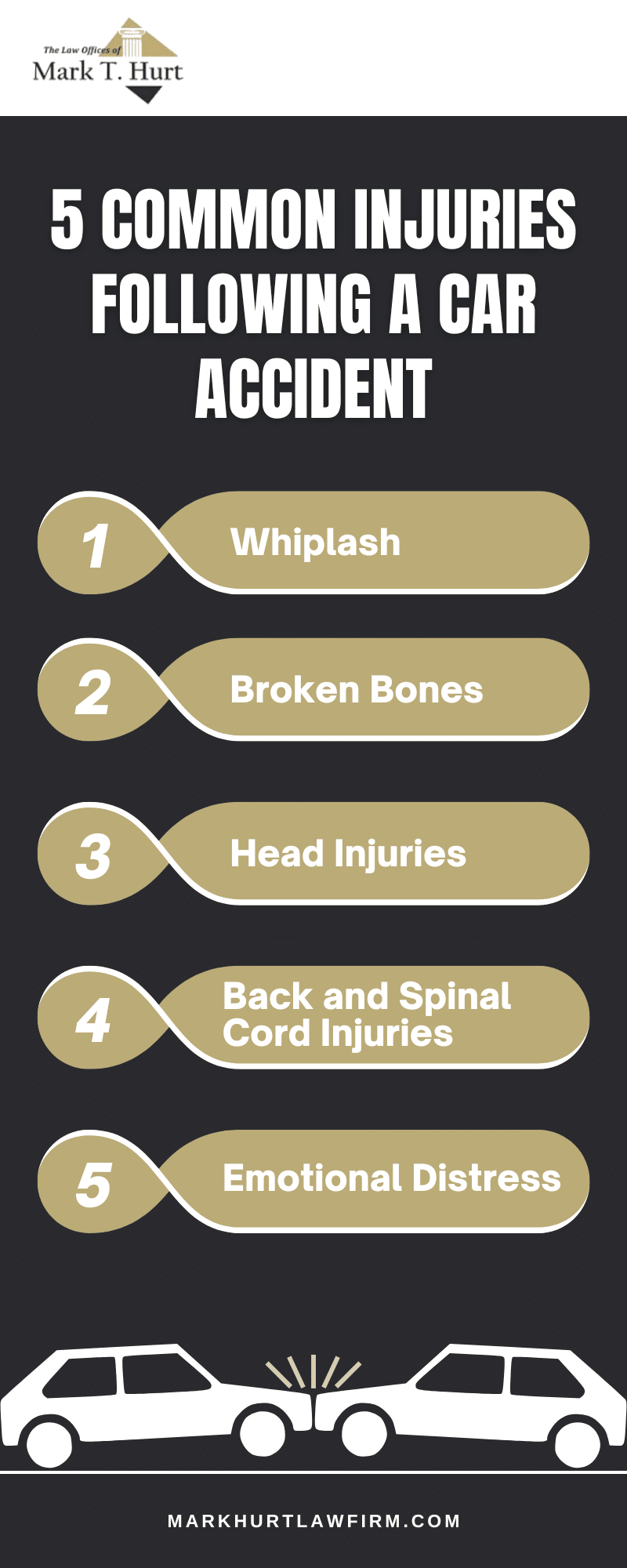
Whiplash continues to be one of the most injuries following a car crash. This occurs when the head and neck are suddenly jerked back and forth, causing strain to the neck muscles and ligaments. Symptoms of whiplash may include neck pain, stiffness, headaches, dizziness, and difficulty concentrating. It is essential to seek medical attention promptly and consult with a car accident lawyer to ensure your rights are protected.
The amount of force and impact caused by a car crash can lead to broken bones. Fractured bones can range from minor to severe, requiring medical intervention such as casting, surgery, or physical therapy. Common fractures include broken ribs, arms, legs, collarbones, and hips. Seeking legal representation can help you navigate the legal complexities and recover compensation for medical expenses, lost wages, and pain and suffering.
Head injuries are another type of accident that might require a Lynchburg car accident lawyer to help you or your loved one obtain compensation. Concussions, traumatic brain injuries (TBIs), and skull fractures are common in car accidents, especially when there is a direct impact to the head. These injuries can result in cognitive impairment, memory loss, mood swings, headaches, and even long-term disabilities. If you have suffered a head injury in a car accident, it is crucial to consult with a car accident lawyer experienced in handling such cases to protect your rights and seek fair compensation.
Back injuries, such as herniated discs and spinal cord damage, are frequent in car accidents, particularly in high-impact collisions. These injuries can cause chronic pain, limited mobility, paralysis, and long-term disabilities. Treatment for spinal injuries often involves extensive medical care, rehabilitation, and ongoing therapy. You may not be able to adequately afford what you need unless you pursue compensation from the parties at fault for causing your harm.
Car accidents can leave victims emotionally traumatized, leading to conditions like post-traumatic stress disorder (PTSD), anxiety, and depression. Emotional distress can impact a person’s daily life, relationships, and overall well-being. Seeking professional help from a therapist or counselor can be important for recovery. A car accident lawyer can figure out how you to factor emotional distress into your claim, as well as accounting for other factors like pain and suffering.
Experiencing a car accident is an overwhelming and life-altering event, particularly when injuries are involved. If you find yourself injured following a car accident in Lynchburg, VA, seeking the assistance of a car accident lawyer can help you to protect your rights and secure fair compensation for your injuries. From navigating insurance claims to negotiating with the responsible parties, a skilled attorney can guide you through the legal process, giving you the best chance of obtaining the compensation you deserve. Remember, your physical and emotional well-being should be your top priority, and with the help of The Law Offices of Mark T. Hurt, you can focus on healing while trusting your legal matters to capable hands.
After a car accident, gathering the right evidence can help to support your insurance claim or potential legal case. The evidence you collect can help establish liability, demonstrate the extent of damages, and strengthen your position during negotiations or in court.
Documentation: Start by obtaining essential documentation related to the accident, including:
Photographs: Capture visual evidence of the accident scene, damages, and contributing factors. Take photos from multiple angles and include the following:
Eyewitness Statements: Obtain statements from witnesses who saw the accident occur. Collect their contact information, and ask them to describe what they saw and any other relevant details. Eyewitness statements can help establish the sequence of events and provide an unbiased account of the accident.
Video Evidence: If available, search for any video recordings of the accident. This may include surveillance footage from nearby businesses or traffic cameras. Additionally, if you or any witnesses captured the accident on a cellphone or dashcam video, ensure that this evidence is preserved.
Accident Reconstruction: In complex cases, accident reconstruction experts can recreate the accident scene based on evidence and provide expert testimony. They can use factors such as skid marks, vehicle damage, and witness statements to help determine liability.
Phone Records: If distracted driving is suspected, obtaining phone records can be crucial. These records can demonstrate whether a driver was using their phone at the time of the accident, supporting a claim of negligence.
Documentation of Damages: Keep records of all expenses and losses related to the accident. This includes receipts for repairs, towing fees, rental car costs, and any other out-of-pocket expenses resulting from the accident. Additionally, document any missed workdays and the associated income loss.
Car accidents are unfortunately all too common, and they can be a source of confusion and stress for those involved. The following are the five most commonly asked questions about car accidents and their answers to help you begin navigating through this challenging situation.
After a car accident, the first priority should always be the safety and well-being of everyone involved. Check for injuries and call for medical assistance if needed. If it’s safe to do so, move your vehicle to the side of the road to avoid blocking traffic. Exchange information with the other driver(s), including names, contact details, license plate numbers, and insurance information. It’s essential to document the scene by taking photos of the vehicles, their positions, and any visible damage. Report the accident to the police and notify your insurance company as soon as possible.
It’s crucial to seek medical attention after a car accident, even if you feel fine. Some injuries, such as whiplash or internal injuries, may not show immediate symptoms. Adrenaline and shock can also mask pain and discomfort. A medical evaluation can help identify any underlying injuries that may not be apparent right away. Additionally, having medical documentation can be essential for insurance claims and potential legal actions — it is essential to at least have some records of how you felt after the accident, even if you only suffered a few scrapes and bruises.
The party at fault for the accident is typically responsible for covering the medical expenses and property damage of the other party. In no-fault states, each driver’s insurance covers their medical expenses and property damage regardless of fault. If the other driver is at fault, their liability insurance should cover your medical expenses and car repairs. However, if the at-fault driver is uninsured or underinsured, your own uninsured/underinsured motorist coverage may come into play to cover your expenses.
It’s generally best to avoid speaking directly to the other driver’s insurance company without consulting an attorney first. Insurance companies may use your statements against you to minimize their liability. Instead, report the accident to your insurance company and let them handle communication with the other party’s insurer. If you’re contacted by the other driver’s insurance company, politely decline to discuss the details and refer them to your attorney or insurance company. The same can be said for police reports. Only give them the necessary facts about what happened. Do not provide more than that. Your Lynchburg car accident lawyer can take it from there.
Car accidents are dangerous, painful, and expensive. You’ll have to deal with repair bills, medical bills, and even lost wages from the time you’ve had to miss from work. While you may think insurance has you covered, you’ll need help battling for your payout.
Unfortunately, insurance companies like to hold on to your money for as long as possible. They generate more money on interest, which means you might be left hanging when you need the money most. All the more reason to get in touch with a lawyer who can fight on your behalf. Our firm has secured multiple million-dollar compensation awards for our clients. While we cannot guarantee the outcome of your case, you can trust that we know how to get results.
You may want to consider hiring a car accident attorney if you’ve suffered significant injuries, face high medical expenses, or are dealing with a complicated insurance claim. An attorney can help protect your rights, negotiate with insurance companies, gather evidence, and represent you in legal proceedings if necessary. Additionally, if fault is disputed or multiple parties are involved, having legal representation can be beneficial to ensure you receive fair compensation.
159 W Main St, Abingdon, VA 24210
Car accidents are dangerous, painful, and expensive. You’ll have to deal with repair bills, medical bills, and even lost wages from the time you’ve had to miss from work. While you may think insurance has you covered, you’ll likely need help battling for your payout.
Unfortunately, insurance companies like to hold on to your money for as long as possible. They generate more money on interest, which means you might be left hanging when you need the money most. All the more reason to get in touch with our firm so that we can advocate – aggressively, if need be – on your behalf.
“We hired Mr. Hurt to help settle a worker’s comp injury case for my husband. Mark, Bart, and Mary worked tirelessly to resolve his case and reach a settlement we were pleased with. They were always available to answer questions and returned calls in a timely manner.“